Live Cohort Program

TBL4T: Task-Based Learning for Teachers

Join Leo Gomez, Neil McCutcheon, and Claudia Fernandez for an 8-session, live online cohort where you’ll move from knowing about TBLT to designing and teaching task-based lessons with confidence – grounded in SLA theory and tested against real classroom decisions.
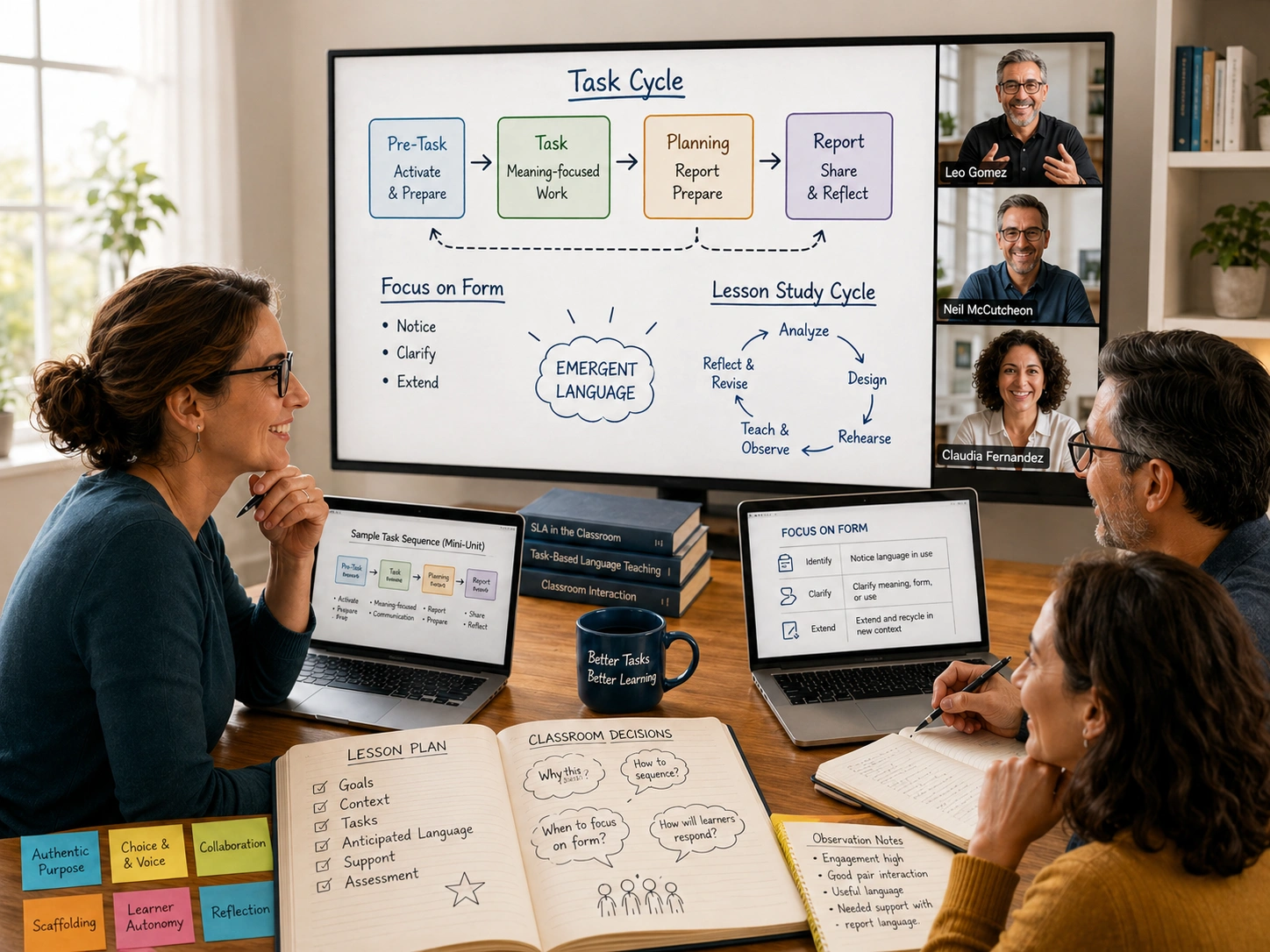
  • Build a classroom-ready task sequence (mini-unit) for your own context
  • Learn practical routines for Focus on Form + emergent language (ICE)
  • Use Lesson Study to analyze, design, rehearse, and revise real TBLT lessons
Format:
Zoom (live sessions) + Google Classroom (readings, prompts, artifacts)
tbl4t-course-thumb
What's Included

Everything You Need to Teach Task-Based Lessons Like a Task Designer

When you enroll, you get a live, facilitated experience designed to support hands-on practice of task-based teaching – not just theory!
  • Eight live, instructor-led sessions (60-80 minutes each)
  • A repeatable Experience → Analysis → Design weekly system
  • Step-by-step training in the Willis Task Cycle (pre-task → task → report → language focus → task repetition
  • Lesson Study block to analyze and rebuild real TBLT lessons
  • Teacher micro-strategies for pre-task, on-task, and post-task success
  • A practical ICE toolkit for Focus on Form (Identify + Capture + Exploit)
  • Classroom-ready artifacts: lesson plans, checklists, templates, and routines
  • A simple assessment approach aligned to task outcomes (not isolated grammar points)
  • Guest contributions (Neil McCutcheon + Dr. Claudia Fernández)
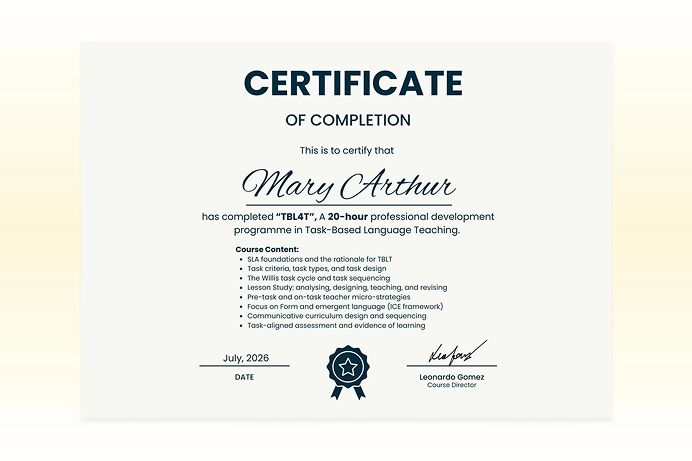
  • Certificate of Completion
  • How the Program Works

    Eight Sessions of Hands-On Practice & Application

    This program is not about passively watching videos. It’s about learning to make better classroom decisions with real-world constraints – i.e. time, curriculum pressure, mixed levels, and institutional expectations.

    Each week focuses on a different aspect of TBLT, where you analyze it using a principled framework, build something for your own context through live facilitation, group discussion, conversation, and hands-on project work.

    You’ll see how other teachers solve similar problems and build confidence by actually doing the work, not just talking about it.

    Week 1
    Why TBLT? The SLA case for tasks

    Build a shared logic for why tasks drive learning and feel the difference between PPP and a task-based lesson from the inside.

    • Understand meaning-first learning, interaction, attention, and automatization
    • Experience PPP vs task-based teaching as a learner
    • Draft your personal “why tasks” rationale for your teaching context
    Week 2
    What counts as a task and why definitions matter

    Get crisp on task criteria so you can stop guessing and start designing intentionally.

    • Distinguish real tasks from “task-like activities”
    • Identify the role of outcome, own resources, gap, and meaning-focus
    • Convert one activity you teach into a task (for your context)
    Week 3
    The Task Cycle as a teachable system

    Turn TBLT into a repeatable routine you can run anytime – not a one-off lesson idea.

    • Run the full Willis task cycle end-to-end
    • Map task types (info-gap, decision-making, problem-solving) onto the cycle
    • Use a task design checklist to evaluate and improve your tasks
    Week 4
    Lesson Study #1 - Experience and analyze a TBLT lesson

    Do the task first, then analyze the lesson like a researcher: what was planned vs what actually happened.

    • Experience a model task-based lesson as learners
    • Compare task-as-workplan vs task-in-process
    • Identify breakdowns and learning opportunities using a Lesson Study template
    Week 5
    Lesson Study #2 - Design your lesson prototype

    Build your own task-based lesson for your classroom – and test-run the setup before you teach it.

    • Design a full lesson for your real context
    • Peer test-run instructions and refine your setup
    • Plan pre-task and on-task micro-strategies (monitoring, modelling, interaction nudges)
    Week 6
    Lesson Study #3 - Teach, reflect, and revise

    Bring back real classroom evidence, then revise your lesson using named design moves – not vibes

    • Analyze what happened vs what the plan predicted
    • Revise using design levers (roles, planning time, info flow, time pressure, repetition)
    • Build post-task routines: content feedback first, then language
    Week 7
    Focus on Form and emergent language

    Build a practical, reliable routine for capturing and exploiting learner language without sliding back into PPP.

    • Use ICE (Identify+Capture+Exploit) to run Focus on Form
    • Turn emergent language into a 10-15 minute post-task language focus
    • Choose from an instant practice menu (high-yield, non-PPP)
    Week 8
    Curriculum, sequencing, and assessment

    Turn lessons into a coherent mini-unit and assess progress without killing the task.

    • Sequence tasks (simple → complex; supported → less supported)
    • Build a defensible assessment plan aligned to task outcomes
    • Finalize and share your mini-unit in a peer walkthrough
    Who This Program Is For

    Created for Teachers Who Want to Teach with Tasks - Not Just Talk About Them

    Created for Teachers Who Want to Teach with Tasks – Not Just Talk About Them
    icon-feedback

    TBLT-Curious Teachers

    You’ve read about tasks, watched videos, or tried a few. You want a clear system and feedback so you can implement confidently.

    icon-activies

    Teachers Already “Task-Based-ish”

    You use tasks sometimes but your lessons still slide back into PPP. You want better task design, better scaffolding, and better Focus on Form timing.
    icon-task

    Teacher Educators / Mentors

    You want a principled way to model TBLT, analyze lessons, and help other teachers build skill - not just collect activities.

    What Makes This Program Different

    Learn to Think & Work Like a Task-Based Teacher

    This is not a course of isolated lessons. It’s a live, facilitated experience built around how task-based teaching actually works in the real world. The focus is on judgment, decision-making, and application so you can design and teach tasks with clarity, not guesswork.
    Real-World Practice
    Practice TBLT Through Real Classroom Constraints

    Rather than following a scripted “perfect lesson,” you’ll practice making principled choices: how to set tasks up, how to monitor interaction, what to do with emergent language, and how to keep tasks coherent across a unit.

    mod-1
    Experience First
    You’ll Feel the Task Before You Teach It

    Every major concept starts with you doing the task as a learner. Then we step back and analyze what it did to interaction, attention, and language use so your design choices are grounded in lived experience, not theory alone.

    mod-2
    Lesson Study
    Learn Through Analysis, Not Opinion

    We use a Lesson Study approach to “read” task-based lessons: what was planned, what actually happened, and why. You’ll learn to diagnose task conditions and make specific design moves, not just say “that went well.”
    mod-3
    Focus on Form Toolkit
    Emergent Language Becomes a System

    You’ll build a practical routine for Focus on Form using ICE (Identify+Capture+Exploit). That means you’ll know what to notice, how to capture it fast, and how to exploit it after the task without slipping back into PPP.

    mod-4
    A Finished Product
    You Leave With a Mini-Unit You Can Teach

    This isn’t “PD you enjoyed.” It’s work you can use. By the end, you’ll have a task sequence for your context, a Focus on Form plan, and simple outcome-based assessment criteria – ready for your next teaching cycle.

    mod-5-certificate
    Build Your Portfolio

    Create Classroom-Ready TBLT Artifacts

    As part of the program, you’ll create a set of task-based teaching artifacts you can reuse, adapt, and teach immediately — built around your context, your learners, and your constraints.
  • Task conversion + task design checklist
  • Task-cycle lesson plan (Version 1 → Version 2)
  • Lesson Study analysis template (workplan vs process)
  • Monitoring notes + feedback routines
  • ICE capture template + instant practice menu
  • Mini-unit map + simple assessment criteria
  • Earn Your Certificate

    Earn a Certificate of Completion

    Upon completion, you’ll receive a Certificate of Completion reflecting your participation in an 8-session, live cohort focused on task-based lesson design, Lesson Study, and Focus on Form routines.
    certificate-thumb
    Enrollment

    Upcoming Dates & Enrollment

    This cohort consists of eight live, facilitated online sessions designed to guide discussion, application, and hands-on design work.

    TBL4T Pilot Cohort (2026)

    $229 USD
  • Live Session 1: May 16
  • Live Session 2: May 24
  • Live Session 3: May 31
  • Live Session 4: June 7
  • Live Session 5: June 14 (Session break + Q&A)
  • Live Session 6: June 28
  • Live Session 7: July 5
  • Live Session 8: July 13
  • Can’t attend live? Recordings available for enrolled participants.
    Want to enroll your team of teachers? Contact us for group pricing.
    Your Instructors
    Teacher Leo Gomez
    Leo Gomez

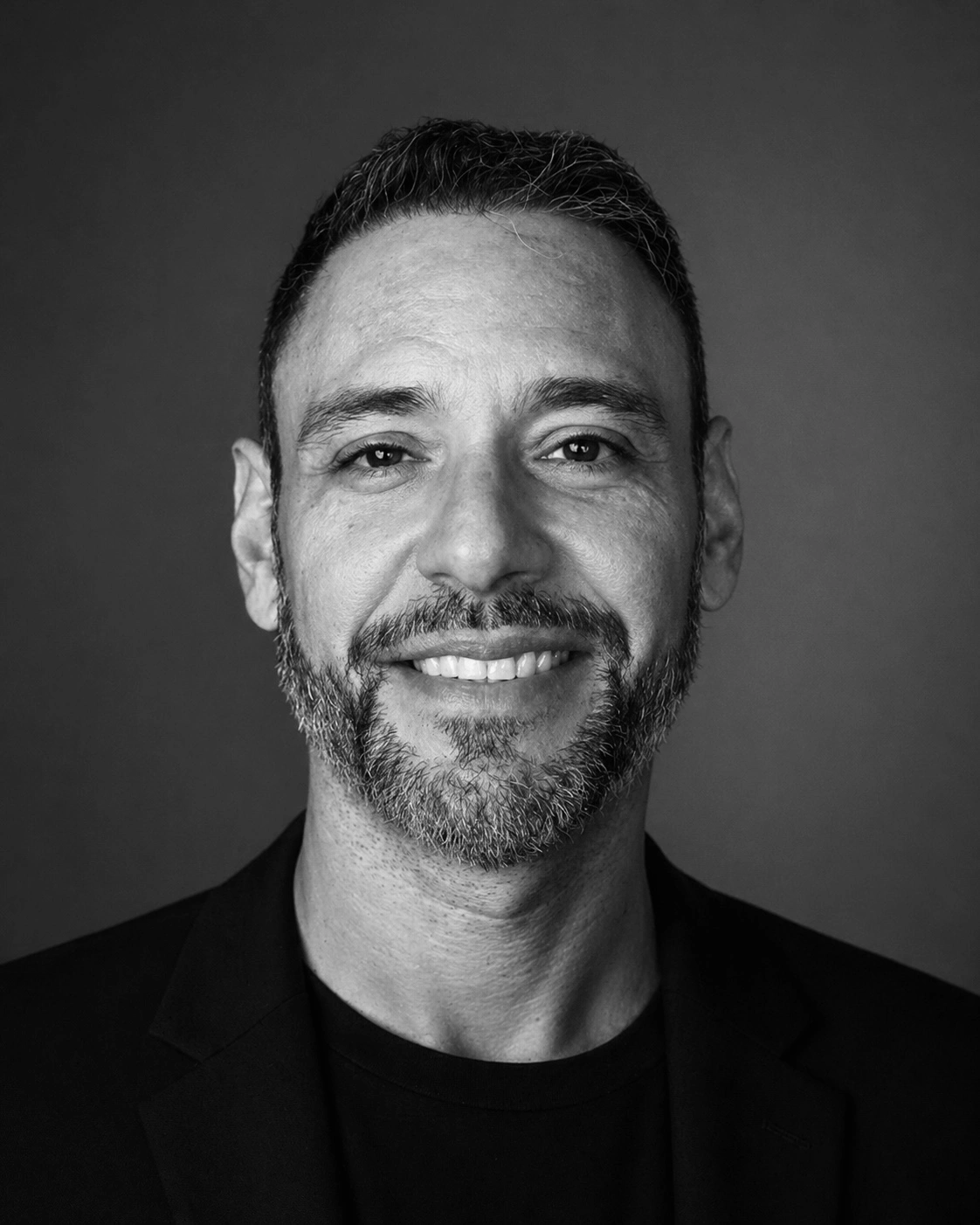
    Leo Gomez is a teacher educator, applied linguist, and independent researcher based in Toronto. He’s been teaching for 25+ years across six countries, working in general English, academic English, ESP, and teacher education; over the last decade, he’s focused on EAP in Canadian colleges and universities. Leo’s work sits at the intersection of SLA research and real classrooms, with a focus on helping teachers build agility and expertise through principled experimentation. In TBL4T, he brings the bridge—turning theory into teachable tasks, routines, and decisions. It’s the course he wishes existed when he first tried to move from PPP to tasks.

    Neil
    Neil McCutcheon

    Neil McCutcheon started out as a primary school teacher and took his CELTA in 1997. Since then, he’s worked in ELT for 25+ years across ESOL in the UK and EFL internationally. He’s a CELTA and DELTA tutor, a regular conference presenter (including IATEFL), and a published ELT author. Neil now co-directs ELTeach in Nottingham (UK). In TBL4T, he brings practical classroom craft — task ideas, setup moves, and the small tweaks that make tasks actually work.
    Clauia Teacher
    Claudia Fernandez

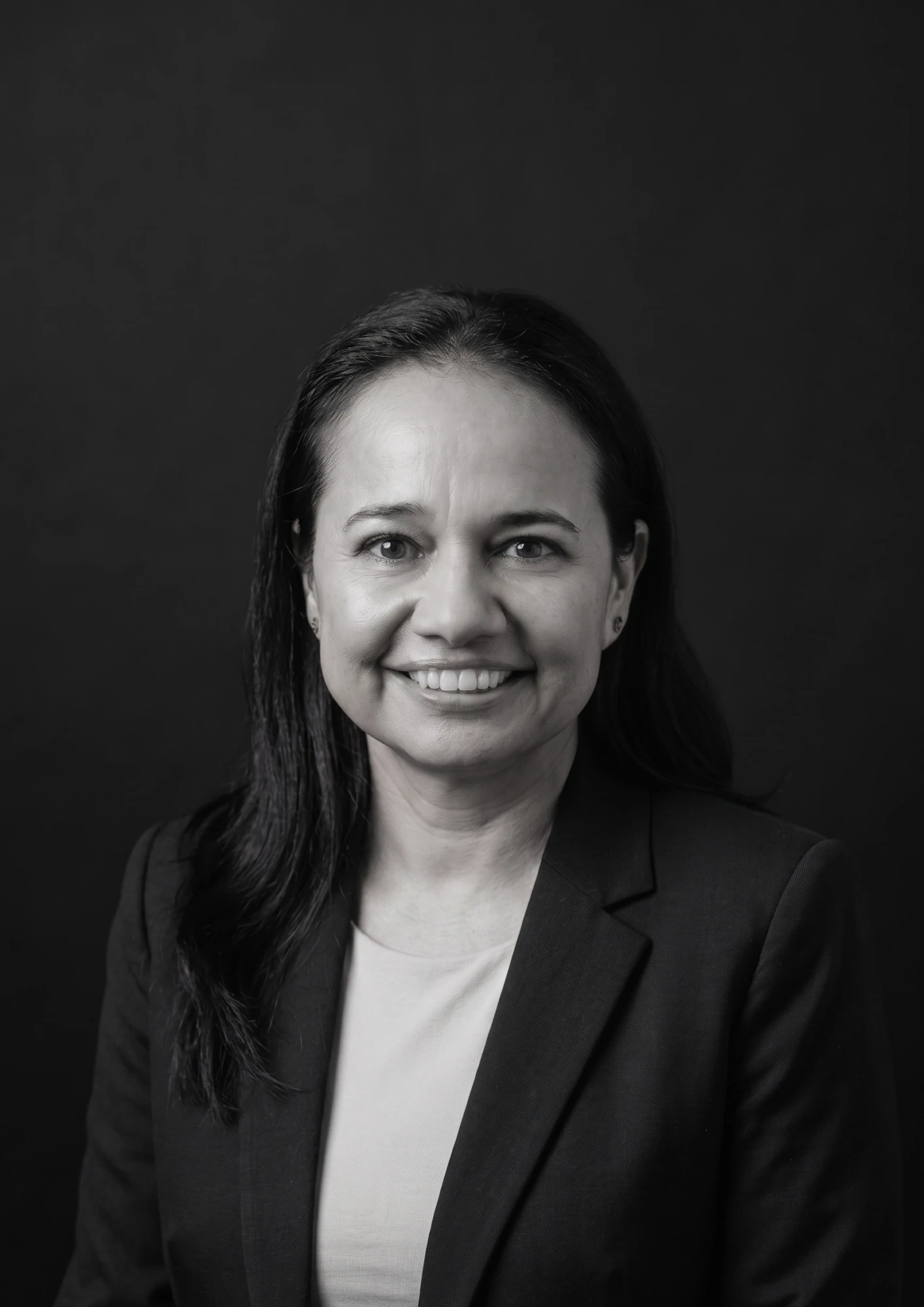
    Claudia R. Fernández is a Clinical Associate Professor at the University of Illinois Chicago, where she directs the Spanish Basic Language Program under a task-based curriculum. She teaches Spanish, linguistics, and teacher education, and her research focuses on classroom language learning, task-based teaching, materials, and processing instruction. Claudia presents widely and contributes actively to professional organizations. In TBL4T, she brings research-informed clarity — especially around Focus on Form, materials, and what strong implementation looks like in real programs.

    Frequently Asked Questions

    Everything you need to know about the program.

    TBL4T is for teachers who want to build real task-based teaching capability, not just learn concepts in isolation. You’ll practice designing, teaching, and revising lessons using a repeatable framework.

    Yes. If you already use tasks, the value comes from strengthening your design decisions: outcomes, conditions, scaffolding, Focus on Form timing, and sequencing into a coherent unit.

    That’s fine. The first three sessions build the foundations quickly, and you’ll learn through Experience → Analysis → Design.

    No. The goal is principled adaptation. You’ll learn design levers and decision rules so you can make TBLT fit your context.

    Plan for 50–75 minutes outside the live session: a short reading response + one design artifact that feeds your final project.

    A classroom-ready mini-unit (task sequence), an ICE-based Focus on Form plan, and an assessment plan aligned to outcomes.